
Kitten Care
-
Bringing Kitten Home
Please check out the page on our website called “Products We Love”. I recommend ordering those items in advance so that they are set up for your new kitten in your home before your kitten’s arrival. Cats are creatures of habit and although they are adaptable and resilient, they do not particularly like change. Having all of these items set up in your home beforehand will make the transition for your kitten more smooth and less stressful and will help them settle in better.
The best way to acclimate your new Siberian kitten to your home is to choose a bathroom or a small room where there is nowhere for the kitten to hide. Put food, water, litter and a cozy cat bed or cat house in the room for when the kitten arrives. Leave the kitten in this small area for at least a few hours. Take the kitten out as often as you want, but I recommend keeping them on your lap while petting them to make them feel safe.
Once you are sure your kitten is eating, drinking, and using the litter box correctly, then you can slowly allow them to explore the rest of the house. You should repeatably take the kitten back to the area with its litter box to make sure it knows its location.
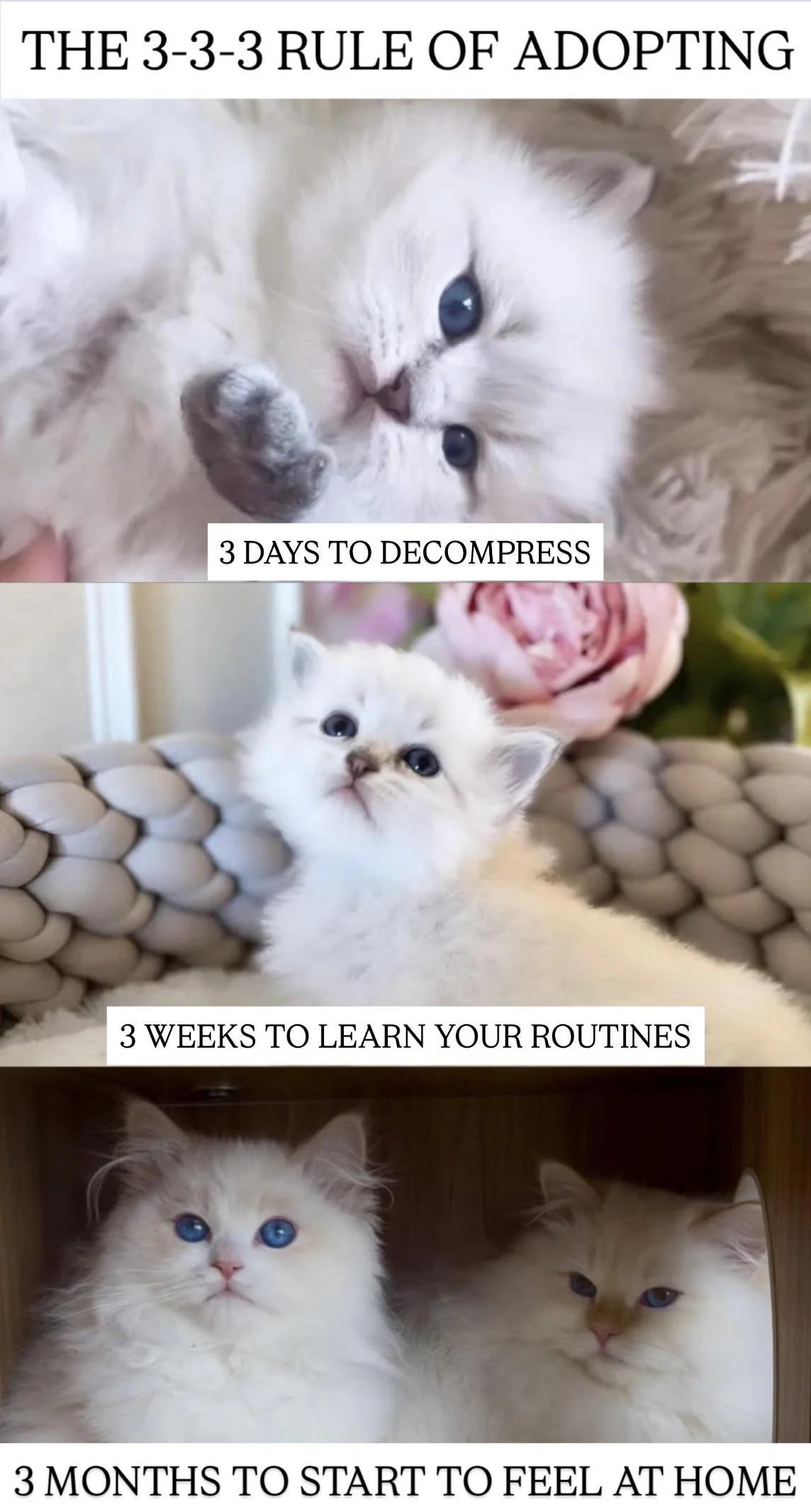
Be patient with your new kitten. It can take a few days or even a week or two for kittens to settle in and feel safe in their new home.
Introduce other pets in the household gradually. Siberians are confident and love everyone, so it shouldn’t take long for them to become accustomed to interacting with other pets. However, remember every cat is different. Some may take longer than others.
-
Kitten Proof Your Home Checklist
Eliminate escape routes
Before your Siberian kitten arrives, check all windows and doors to make sure they cannot escape the house. Siberians are indoor cats that should remain inside at all times. If you decide to take your Siberian outside, they must be supervised.
Remove poisonous plants
Some indoor plants are poisonous to cats. Check ASPCA’s list of toxic plants to know which plants should be removed or kept out of reach from your Siberian kitten.
Secure other poisonous substances in safe locations
Other poisonous substances such as cleaning supplies, nail polish remover, medication, paint, etc. should be secured in safe locations where your Siberian kitten can not get to them.
Secure breakable items in safe locations
Make sure breakable items are secured in safe locations. Don’t leave items you don’t want falling on the ground too close to the edge of counters, tables, or shelves.
Secure sharp objects in safe locations
All sharp objects such as knives, needles, scissors, etc. should be secured in safe locations out of reach from your Siberian kitten.
Secure all wires in safe locations
Siberian kittens loves to play with wires and sometimes chew on them. Secure wires out of reach of kittens to prevent wire damage.
Leave all toilet seats down
Develop the habit of always leaving the toilet seat down. You don’t want a Siberian kitten to accidentally fall in or drink water from the toilet.
Familiarize yourself with possible hiding spots
Siberian kittens love to find places they can hide. You should familiarize yourself with possible cat hideouts throughout your home such as underneath beds, behind furniture, in laundry baskets, etc. Confirm all these locations are safe. You wouldn’t want your new kitten to accidentally get stuck behind a washing machine.
-
Food and Litter
**Food**
Our cats and kittens eat the Royal Canin brand food, both wet and dry. We also integrate a variety of raw food on occasion. Our cats eat a diverse diet of sardines, chicken from our own farm, beef from our neighbor’s cows, tuna (only very occasionally though as canned tuna contains mercury), wild caught salmon, eggs from our farm, my homemade yogurt from local, raw milk and a probiotic mixed in (usually Purina FortiFlora). Please never feed your cat pasteurized dairy as they cannot properly digest it. If you only have access to pasteurized yogurt then please make sure it is full fat or Greek. Make sure to give your cat supplements as well: taurine, lysine, probiotics & dry pumpkin are good ones.
Siberians thrive on wet food. Feed them wet or raw food 2x a day, and dry food only once a day. If they have too much dry food, they are likely to get an upset stomach. Too much kibble can also lead to a variety of health problems. Cats in the wild eat a lot of raw meat and have evolved all over the world eating raw meat, and even raw eggs and raw dairy. It is always best to feed them as close to what they would eat in the wild as possible. Here are some helpful and informative articles below on the benefits of a raw feline diet:
For a raw diet to be balanced it is crucial to ensure that your kitten or adult cat is receiving the required nutrients and vitamins for proper development and thriving health. Kittens need: 75% muscle meat, 15% organs, 10% bone. Adult cats need 80/10/10.
For ease and convenience you can also just subscribe to Darwin’s Natural Raw and have a complete and nutritious raw diet for your cat delivered straight to your door. I have heard very good things about Darwin’s Natural raw subscription.
Stella&Chewy’s is another good option for a complete raw diet delivered straight to your door.
An amazing resource for the feline raw diet is the Facebook group called: Cats Completely Raw And Proud (Cat CRAP). Go to the Files section there for an in-depth list of informative resources.
——————————
If you wish to use a different type of diet, you should gradually transition to a specific brand by mixing in a small amount of new food on day one, increasing the amount of new food over 7 days’ time until transition is complete. Failure to provide the food your kitten is accustomed to during the first several days in its new home can result in upset stomach, diarrhea, weight loss and/or constipation, which can lead to other, more serious health issues.
**Litter**
Your kitten has been litter-box-trained and Litter Robot trained using unscented Litter Robot brand clumping litter, which is 100% bentonite clay. A cheaper alternative is the Dr Elsey brand of unscented, clumping litter. Please purchase at least one bag of this or similar litter.
The litter box should be shown to the kitten several times until you’re sure they know where it is. New kittens are often very excited about exploring their new home and may forget the location of the box if not taken to it multiple times. As the kitten gains access to the whole house and becomes familiar with the layout, the box can be moved from the small area you placed the kitten in to a more discreet, permanent location.
My adult cats use the Litter Robot – an automatic, self-cleaning litter box. We also have regular litter boxes, and even an outdoor litter box that we built into their catio. My kittens are also trained to use the Litter Robot before they go to their new home. They do not weigh enough to activate the older Litter Robot models on their own until about 4 – 5 months old, but the Litter Robot is still a more convenient litter box method AND now the newest model, Litter Robot 4 detects the kitten no matter how young or light they are. The new model is also much more quiet and has lots of other new and improved features. I cannot recommend the Litter Robot enough! It is well worth the investment.
If not starting with the Litter Robot, I suggest starting your kitten off with a very basic, standard open litter box. The most frightening for a kitten is the flap style litter box, so I do not recommend this type until the kitten is older. Otherwise, the kitten may be too scared to go through the flap and start using the floor for a litter box or some other obscure location, like your bed.
-
Grooming
Please DO NOT declaw your kitten!
I suggest trimming your kitten’s nails regularly. It keeps your kitten from getting their nails caught in fabric which can be painful to the kitten. When the kitten is quiet, gently massage her feet to get her use to being handled. Then, gently push the claw forward and use cat nail trimmers or ordinary nail clippers to nip off the end. Be extra careful not to get too close to the quick. Watch YouTube videos to learn more about how to trim a kitten’s claws.
I also suggest bathing, blow drying, and brushing your kitten regularly. If you are planning to show your cat, it is important to get them used to being washed and blow dried. You will want them to look their best when it comes time to show them.
Kittens should also have their teeth regularly cleaned to prevent dental issues in the future. Start by using your finger with cat toothpaste to clean your kitten’s teeth. Once your cat gets used to your finger, you can try using the small toothbrush included with the toothpaste.
To clean your cat’s ears and eyes, use a cotton ball with warm water to gently remove wax and eye discharge.